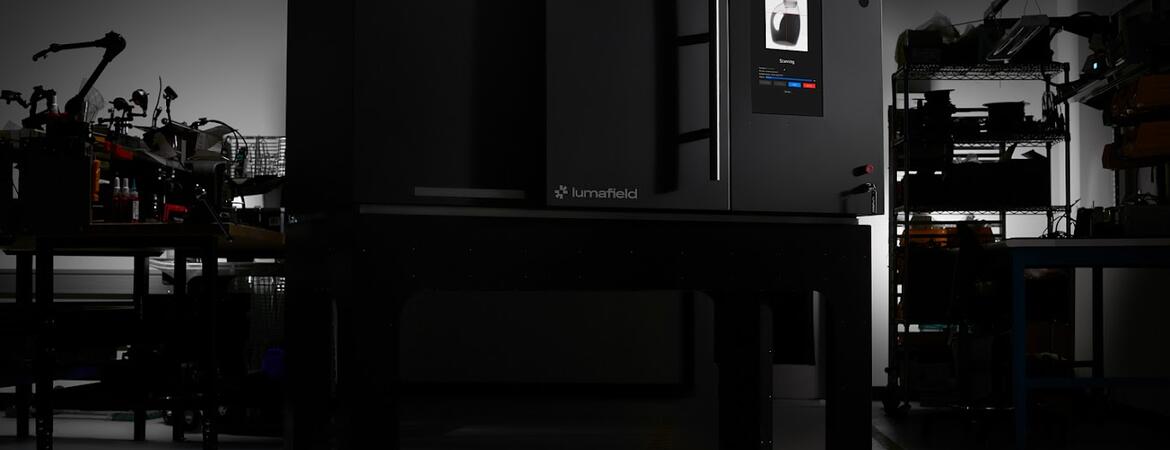
A product can look perfectly fine on the outside and still contain a flaw that causes it to fail. Finding that hidden problem often means cutting the product apart or sending it elsewhere for specialized testing.
A new partnership between the University of California, Riverside and Lumafield will give engineering students and researchers another way to investigate what is happening inside manufactured products without destroying them.
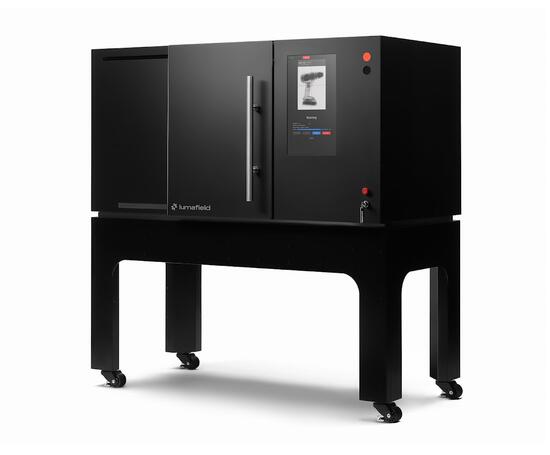
Lumafield will provide UCR’s Advanced & Integrated Manufacturing (AIM) Hub with access to a Neptune 190kV industrial computed tomography scanner, its Voyager analysis software, and technical training and support.
Industrial CT uses X-rays to create detailed three-dimensional images of an object’s interior. The technology can reveal cracks, air pockets, assembly errors, and other features that may be difficult or impossible to see using conventional inspection methods.
“Our team believes in AIM Hub’s mission and wanted to give students hands-on experience with the same CT and defect-analysis tools that leading manufacturers across the world depend on today,” said Jon Bruner, chief marketing officer at Lumafield. “This kind of collaboration also supports the corporate community by better preparing these students for engineering and manufacturing roles after graduation.”
Lumafield’s Voyager software allows users to examine and share scans through a web browser. Engineers can measure internal features, compare manufactured components with their original digital designs, and use automated and artificial intelligence-enabled tools to identify possible defects.
The same capabilities could help manufacturers working with UCR investigate product failures, determine whether components were produced as intended, and better understand problems within a manufacturing process.
Those are also the kinds of problems AIM wants students to encounter before entering the workforce.
The AIM Hub is a newly approved center within UCR’s Marlan and Rosemary Bourns College of Engineering. Now in its launch phase, AIM is being developed to connect industry challenges with engineering education, applied research, and hands-on student experiences.
“One of the most encouraging things about AIM is how quickly industry partners are stepping forward to help us turn the vision into something tangible,” said Kavan Hazeli, professor of mechanical engineering and founding director of the AIM Hub. “By capturing the internal and external structure of real components and connecting that information to digital twins, virtual models that reflect the behavior of physical parts, we can create a much faster feedback loop between design, manufacturing, and performance. Students will be able to see how a part is actually made, identify defects or opportunities for improvement, and use that information to refine designs without relying on lengthy cycles of physical trial and error. This is an important step toward the future of manufacturing, where engineers can make faster, more informed decisions, reduce waste, and continuously improve products using real-world data..”
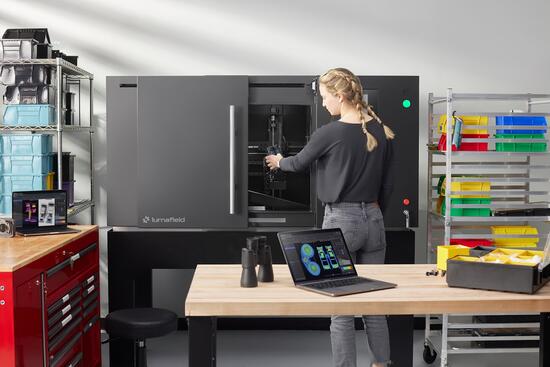
Lumafield will install and calibrate the scanner, train AIM’s core team to use the equipment and software, and provide ongoing technical support. Students and faculty can use the technology for research, digital-twin development, industry-sponsored projects, and hands-on manufacturing analysis.
Lumafield also sees the partnership as an investment in the engineers who will eventually carry those skills into industry.
“A successful partnership for us would be seeing UCR students graduate with hands-on experience using technologies they will encounter in industry, then take that experience into engineering and manufacturing careers,” said Larry Nelson, senior enterprise account executive at Lumafield. “We also hope to see UCR and Lumafield working together on research and development projects that give students experience solving real problems and create stronger connections with manufacturers in the region.”
As AIM develops, the Lumafield partnership adds a practical way for students to learn by doing. They will be able to examine real products, find problems hidden beneath the surface, and use what they discover to make engineering decisions.